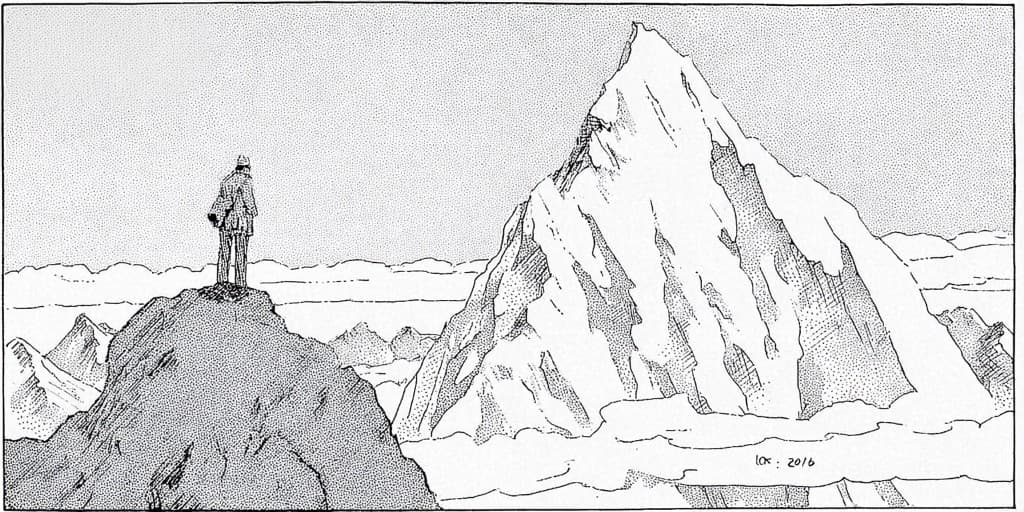
On starting as a Product Designer
What I wish I'd known when I started — and what I share with people starting now.
I'd like to emphasize that this is a personal piece, not a hard truth. So let's get started.
Let's start with definitions: what is a product designer?
For me, it's a mix of two fields of design — experience & interface design — combined with strategy. That's what, by my definition, sets the role of Product Design apart from others. Of course there are people who also have expertise in research and content, but a solid PD, in my perspective, has mastery of UX, UI, and strategy. With that out of the way, we can focus on developing those two.
Handling the craft
In order to make good work, you need to be able to identify good work. How does that work? By developing taste — by consuming great products. There are some that we, as designers, have pointed out to be great: Airbnb, Stripe, and more. So amass knowledge by looking at those experiences. Open the app, use it, dissect the details, understand why a decision was made.
And when you're ready, one of the best exercises for reverse-engineering how those apps were designed is to paste a screen into Figma (or your tool of choice) and rebuild it. Make it as similar as possible — be mindful of the spacing, font weights, color selection.
User experience and user interface are closely related, so by doing this you'll build up knowledge of how others approach and solve problems. Once you have the knowledge of, say, Airbnb, challenge yourself to build a screen or flow that would feel like part of the same product.
As for starting with a blank page — making interfaces or flows that aren't dissections of an existing one — take a prompt and do it. There are a ton of prompt tools out there. Just keep practicing the skills of taste and execution.
Find courses by great designers you respect and learn from them. But remember: learning is only one part — practicing is the other half.
Here I'd like to share a very, very personal opinion: I've seen tons of exercises that revamp an existing app, changing the UI to make it "better." For me personally, those exercises yield no real results, and they're hard to share in your portfolio. Thinking blank-slate, or imagining something that could be part of an existing app, is closer to the work you'll do in the real world.
Walking the strategy bridge
This is one of the crucial skills for being an effective product designer, and if I had to start somewhere, it would be by developing a product sense. What is product sense, you ask? For me, it's the ability to spot opportunities that will impact the business in a good way. And the best way to develop that is — again — to amass knowledge of existing products. For example, examine Hey and Gmail: two mail solutions with very different approaches, goals, and value-delivery. Understand what specific, deliberate decisions those teams made. Look at Threads and Twitter and do the same. Look at new products. Listen to great product thinkers and learn how they make sense of product sense — a great one for me is Julie Zhuo; she's always sharing thoughts.
Learn to build a bridge between user-centric and business — again, that's something only practice can give you. Solving Product Design Exercises is a great book with exercises you can use to train this muscle, and I'm sure there are tons of PD interview exercises out there you can take a stab at. Then find someone to share what you've made with, and receive feedback.
Once you've practiced this muscle, you'll start being able to make hypotheses about why certain products made specific decisions.
Some final advice
- Courses are great, but nothing beats practice. At some point, take a pause from courses and start practicing.
- Have patience with yourself. The work you output probably won't be at the level you expect — and that's normal. Getting better is a function of time multiplied by the work you put in.
- Find mentors, or people willing to help you out. Be specific about how you'd like to be helped — it's harder to get a yes when you ask vague questions.
- Know thyself. Understand which parts of the work are more enjoyable for you, which come more naturally. It will be very relevant to know yourself when you start gaining more seniority.
- The best skill of a designer is questioning. Learn to ask questions and cultivate curiosity.
This is only a small kickstart guide for those starting out in this world. There's a ton of other stuff you can learn — or should get great at — like teamwork, handling feedback, explaining design decisions to stakeholders. But let's keep those for another piece, and hopefully this gives you a starting track.
Let me know if you have any questions or any topic you'd like me to deep dive into in the future. Stay hungry.