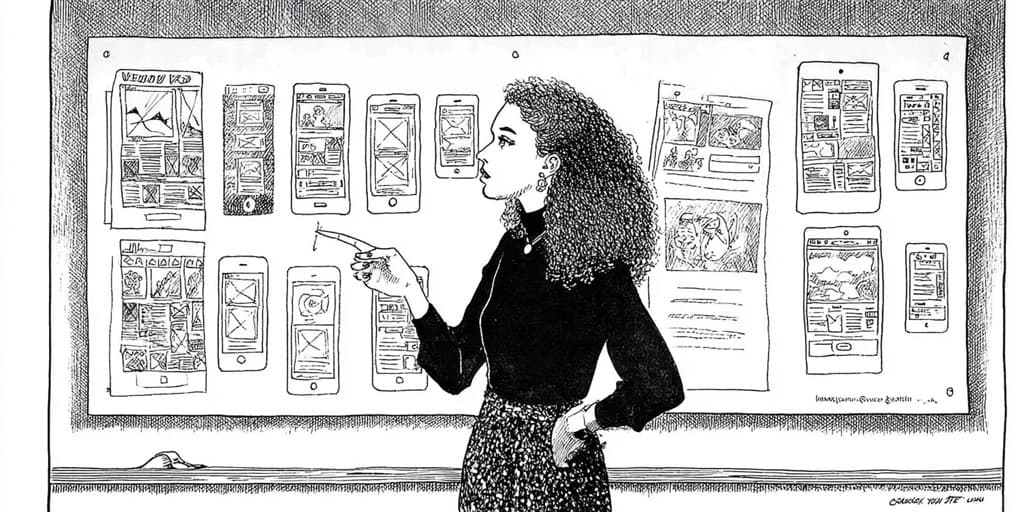
On doing better design presentations
A small cheat sheet for showing your design work — being prepared, anticipating questions, and breaking down decisions clearly.
This is basically my cheat sheet, putting it out here so I don't forget about it.
Be Prepared
This might sound obvious, and at this point you might be questioning why you're wasting your time reading this. I'd kind of agree — but hear me out. At least for me, sometimes the most obvious step, the easiest one, is the one I tend to skip. Let's not do that for preparation. So let's make sure we're prepared. And what does prepared look like for me? Here are some basics.
Know exactly what your goal is for presenting. Is this an FYI, a critique, or a session to get buy-in? You don't know? Well, start by answering that question.
Be ready for your audience. Who are the people you're presenting to? Designers, business, sales, engineers? Of course, they'd be able to understand even if you don't prepare it for a specific audience. But remember: just like the products you're building, there's an art to optimization — optimize for your audience.
Finally, got your presentation materials? This doesn't have a flat answer; it'll depend on your answers to the previous questions. But at the very least, if you don't prepare anything special, have some idea of the timing and how you're going to use this material to present. AND MOST IMPORTANTLY, BE READY FOR YOUR PLAN TO CHANGE ONCE YOU START PRESENTING.
Mental Sparring
Wtf dude, this is a presentation guide, not a boxing class. Alright, now that I've made my bad joke, I can start.
One of the best skill sets I've developed is being ready for any type of question. You might think this is impossible — and yes, it is — but the idea of being ready for questions isn't only about having the facts; it's about being mentally ready. And trust me when I say you probably already know the questions, too. You just need to do some memory work and backtrack through the project: think of the stuff you're still doubtful about, the questions you asked yourself while designing.
Is this the right path? Should I place the entry point here or there? How would X metric be affected if we take this route instead? Do I add one more pixel? (jk)
That's the best place to start. Know your design, know its weak points, know where doubt arose while you were designing — that's probably where the first questions will come from. Now take a deep breath: more than being ready to answer the question, you can also be ready to ask back, to understand other perspectives and learn. So there you go — now you have the answer to all the questions that can be asked.
Breaking Down Your Decisions
Seeing a screen doesn't fully convey all the rationale behind it, and explaining every screen probably isn't the best presentation strategy either. Break down the flows and spot what I like to call the "critical screens" — the ones you delved into the most, the ones you know carry the product hypothesis. Take your audience to a deeper level there, and make sure to explain your rationale. Include the metrics you expect, possible outcomes, business impact, and of course your visual decisions.
When breaking these decisions down, I like to follow a very simple formula:
"Factual" decisions: These are most of the time based on existing patterns, backed up by usability testing. For these types of decisions, it should be easy to point at some kind of evidence that led you down that path.
Opinion-based decisions: Or — easier to think of them as — hypotheses or bets. These are the calls where you're willing to take a risk, or where "your gut" tells you there might be something interesting to learn. These are where your thinking process as a designer shines, where you put your craft on display. I framed these as bets and hypotheses on purpose, because that's probably how they should be treated — and alongside presenting them, you should be ready with some way of proving or disproving them.
One extra piece of advice: prototypes work wonders in presentations. I know it's "extra work," but do it once — trust me, you're gonna notice the difference.
Let's Close It Up with Some Takeaways
It's always helpful to have, ready at hand, the questions or input you'd like to get from your audience. Always leave a few minutes — if those weren't covered during the presentation — to ask for them directly. That'll give you fuel to keep evolving your work.
There's one extra little secret: you got this. Trust me — you got that job for a reason. These presentations are not a test. Get that "what if I fail" out of your head. Trust in yourself, pump yourself up, and go get them, tiger.
P.S. It would be a mistake not to acknowledge that all of this comes from different sources: mentors, peers, managers. Thanks for being there and helping me do better.